
Uganda’s civil society sector stands at a pivotal moment demanding stronger governance systems, ethical leadership, and transparent operations. In response to this need, the Fidelis Leadership Institute (FLI), with support from the Austrian Development Agency (ADA), convened a transformative two-day Governance and Accountability Training for Civil Society Organisation (CSO) Leaders on 23rd–24th October 2025.
The training brought together 226 leaders 88 in-person and 138 online—representing 62 organizations across governance, health, education, youth empowerment, gender justice, and disability inclusion. What emerged was not merely a workshop, but a powerful leadership awakening anchored in FLI’s core values of Faithfulness, Availability, and Teachability (F.A.T.).
Why This Training Matters
Civil Society Organisations play an essential role in Uganda’s development landscape: amplifying community voices, advocating for accountability, advancing social justice, and delivering key public services. Yet many face persistent governance challenges including:
- Weak internal structures and unclear board roles
- Board-management conflicts
- Gaps in regulatory compliance
- Limited ethical leadership capacity
- Declining public trust
The FLI–ADA partnership intentionally set out to address these gaps by equipping CSO leaders with practical governance tools, legal knowledge, leadership ethics, and strategic communications skills to strengthen institutions from within.
Day 1: Strengthening Boards for Accountability
Day 1 targeted Board Members and Board Chairs, focusing on the responsibilities of governance stewards.
Key Sessions Included:
Opening Keynote – Ethical Leadership Begins with the Self
Delivered by Mrs. Pheona Nabasa Wall SC, Executive Director of FLI, the opening session emphasized self-awareness, accountability, and integrity as the bedrock of leadership.
Understanding Your Leadership Style
Participants explored personality dynamics and their impact on decision-making, delegation, and conflict resolution.
Corporate Governance under URSB
Led by URSB’s Mr. Abaho Derrick, this session clarified legal compliance requirements, annual filing obligations, documentation standards, and the accountability expectations for incorporated CSOs.
Governance Under the NGO Act
Dr. Stephen Okello, Executive Director of the NGO Bureau, broke down compliance expectations and provided practical steps for strengthening governance culture.
Storytelling for Public Influence
Ms. Precious Collette trained board leaders in narrative framing and strategic communication to enhance organisational credibility and public trust.
Strategic Risk Planning
Mr. Gerald Wall guided participants through risk identification, crisis-readiness, and building resilient governance systems.
Day 2: Empowering Executive Leaders for Sustainable Impact
The second day focused on CEOs and Executive Directors, sharpening executive-level governance and operational leadership.
Highlights Included:
- Directors’ Legal Duties under Ugandan law led by Caroline Egesa (URSB)
- Advanced NGO Act compliance with Dr. Stephen Okello
- STAR-method storytelling for advocacy led by Tina Wamala (MCIPR)
- Risk management and continuity planning with Mr. Gerald Wall
- Values-based leadership reflections moderated by Mrs. Pheona N. Wall SC
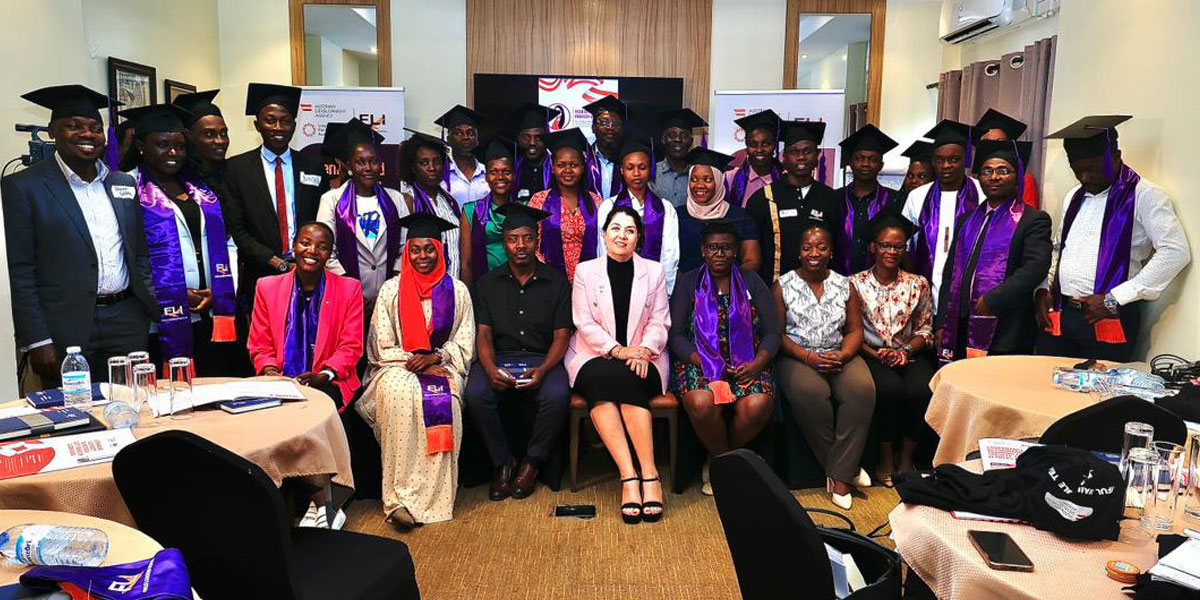
The day concluded with the commissioning of graduates by Dr. Katja Kerschbaumer, Head of Austrian Development Cooperation, who reaffirmed ADA’s commitment to strengthening governance and accountability across Uganda’s civil society.
Who Attended: A Snapshot of Inclusion
- 226 leaders trained (physical + virtual)
- 44% women participation
- 1 leader with disability (PWD) representing IDIWA
- Participants from 15+ districts, including Karamoja, Masaka, Lira, Arua, Jinja, Wakiso, Kasese, and Kampala
- 62% of participants aged 35 and under, signaling strong youth leadership engagement
The participation of a PWD leader enriched discussions on disability mainstreaming, inclusive governance, and accessibility policies—setting a transformative tone for inclusive leadership.
Measurable Impact and Early Results
Within days of the training, organizations began implementing reforms:
Immediate Outcomes (within 7 days)
- 18 CSOs filed overdue annual returns
- 12 organizations clarified board–management roles
- 8 CSOs launched advocacy campaigns using improved storytelling techniques
- 15 risk registers completed
- Multiple organisations adopted values-based leadership principles
Medium-Term and Long-Term Impacts
Over the next 3–12 months, participants expect to roll out:
- Full governance audits
- Board evaluations
- Ethics code adoption
- Gender and disability inclusion audits
- Strategic risk continuity plans
The long-term vision is a resilient, transparent, and compliant CSO ecosystem that models integrity and inspires public confidence.
Digital Legacy: A Permanent Online Learning Resource
The entire training was recorded and is now freely available on FLI’s YouTube channel. This digital archive transforms a two-day event into a continuous capacity-building platform that will reach thousands more across Uganda, Africa, and the diaspora.
Watch the full training here:
youtube.com/playlist?list=FLI_Governance2025
Early indicators (first 48 hours):
- 1,200+ views
- Highest engagement: URSB Compliance & Storytelling for Advocacy
- Strong organic shares among youth-led organisations
Participant Feedback
The training received overwhelmingly positive feedback. Participants described it as:
“A leadership awakening.”
“A much-needed space for honest reflection and growth.”
“Practical, inspiring, and values-driven.”
Direct testimonials highlighted improvements in board-executive relationships, strengthened governance frameworks, and renewed commitments to ethical leadership.
Conclusion
The Governance & Accountability Training marks a milestone in Uganda’s civil society transformation. Through the partnership between ADA and FLI, the program ignited a ripple effect—strengthening 62 organisations, equipping 226 leaders, and setting the stage for long-term institutional excellence.
This was not just capacity building. It was the beginning of a new movement for ethical, inclusive, and sustainable leadership in Uganda.
The journey continues and thanks to FLI’s digital learning archive, the impact will inspire generations.
Leave a Reply