
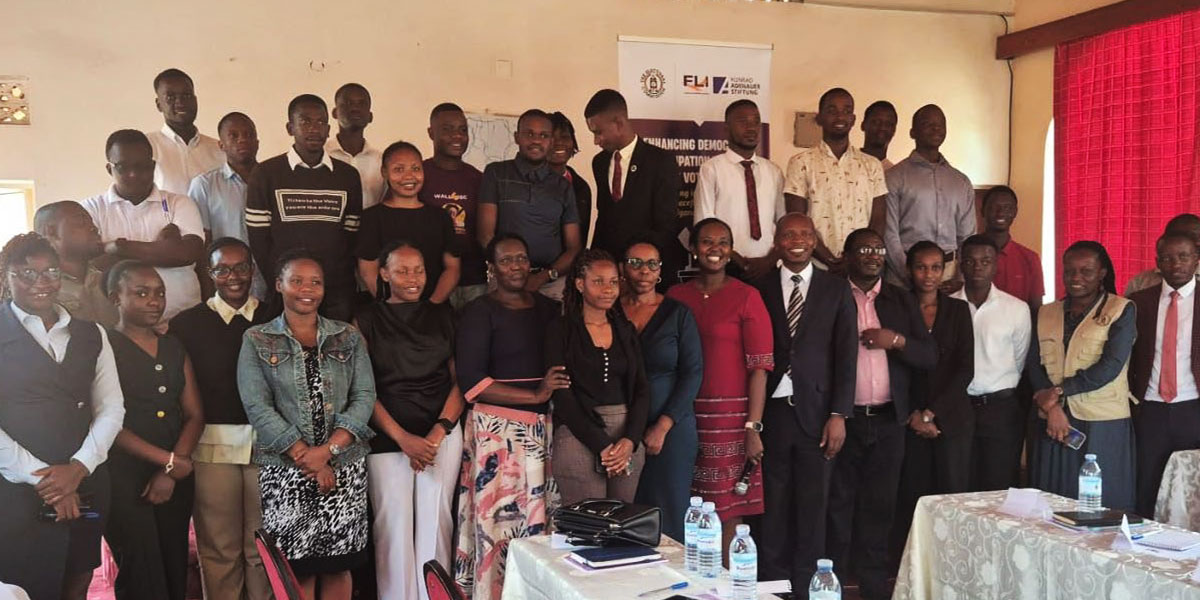
Between 10th and 20th November 2025, the Fidelis Leadership Institute (FLI), in partnership with the Electoral Commission of Uganda (EC) and with support from the Konrad Adenauer Stiftung (KAS), successfully conducted a Regional Voter Education Training Program aimed at strengthening civic competence and preparing citizens for the 2025/2026 electoral cycle.
The program reached 218 participants across six districts in Masaka, Mbale, Mbarara, Jinja, Arua, and Gulu bringing together youth leaders, civil society actors, religious and cultural leaders, media practitioners, business leaders, and community mobilizers.
These participants represent influential voices within their communities and play a critical role in promoting responsible civic participation and peaceful electoral engagement.
Building Informed and Responsible Citizens
Civic education remains a cornerstone of a functioning democracy. However, many communities still struggle with misinformation, low awareness of electoral procedures, and limited access to credible information about voting processes. Recognizing these challenges, the voter education program was designed to provide practical, citizen-friendly training that demystifies electoral procedures and empowers communities with the knowledge necessary to participate responsibly in democratic processes.
Through the training, participants learned about:
- Electoral laws and regulations governing elections
- Polling-day procedures and voter verification processes
- The roles of electoral stakeholders and security agencies
- Campaign ethics and lawful political participation
- Election offences and penalties
- Conflict prevention and dispute resolution mechanisms
- Responsible media engagement and community mobilization
Interactive teaching methods such as mock polling demonstrations, role-play scenarios, group discussions, and open forums with Electoral Commission officials helped ensure practical learning and strong community relevance.
Measurable Impact Across Six Regions
The program produced significant outcomes that strengthened civic readiness ahead of the upcoming elections.
Key results include:
- 92% of participants reported an improved understanding of the Electoral Commission’s role and electoral procedures.
- 87% expressed confidence in educating their communities about voting processes.
- 90% gained clarity on election offences and the legal consequences associated with them.
- 100% of participants committed to promoting peaceful and lawful electoral participation.
Beyond the training room, media coverage from regional radio and print outlets extended the civic education message to an estimated 300,000 citizens across the country.
Regional Highlights
Masaka
Participants demonstrated strong practical learning through simulated polling exercises and developed action plans to conduct civic briefings in universities and communities.
Mbale
Local leaders drafted a cooperation framework with the Electoral Commission and security agencies to ensure smooth electoral coordination.
Mbarara
Legal experts explained electoral offences and penalties, prompting student leaders and civil society actors to pledge action against vote buying and electoral malpractice.
Jinja
Community leaders committed to organizing pre-campaign stakeholder dialogues to promote ethical campaigning and peaceful political engagement.
Arua
Cultural institutions pledged to use traditional gatherings and radio platforms to promote accurate voter information and counter misinformation.
Gulu
Youth groups committed to forming civic clubs in schools and universities, strengthening youth leadership in promoting peaceful democratic participation.
Addressing Persistent Challenges
Despite the progress made, the program also identified several challenges that require continued attention.
Across regions, participants highlighted:
- The rapid spread of electoral misinformation
- Limited availability of voter education materials in local languages
- The need for ongoing training beyond one-day workshops
- Political sensitivities that sometimes limit open dialogue
To address these issues, the report recommends expanding vernacular civic education materials, strengthening media partnerships, supporting youth leadership initiatives, and conducting follow-up training sessions across communities.
A Strong Partnership for Democratic Participation
The success of the program reflects a strong partnership between FLI, the Electoral Commission of Uganda, and Konrad Adenauer Stiftung.
- FLI led program implementation, curriculum design, stakeholder mobilization, and documentation of lessons learned.
- The Electoral Commission provided technical expertise on electoral procedures and legal frameworks.
- KAS supported the initiative financially while promoting democratic principles and citizen participation.
Together, these partners strengthened the foundations for informed, peaceful, and accountable democratic participation in Uganda.
Looking Ahead
The Regional Voter Education Training Program has laid a strong foundation for civic engagement across Uganda. By equipping community leaders with accurate knowledge and practical tools, the initiative ensures that citizens are better prepared to participate responsibly in the 2025/2026 electoral cycle.
Moving forward, continued investment in youth mobilization, community outreach, media engagement, and localized civic education materials will be critical to sustaining these gains and expanding their impact across the country.
At the Fidelis Leadership Institute, the commitment remains clear: to nurture ethical leadership, informed citizenship, and accountable governance across Uganda.
Join the FLI Community
Become part of a growing community of leaders committed to ethical leadership, civic responsibility, and transformative change. The Fidelis Leadership Institute Membership Program offers access to exclusive leadership trainings, thought-leadership publications, networking opportunities, and professional development programs designed to equip individuals and organizations to lead with integrity and impact. Whether you are a young professional, a civic leader, or an executive seeking to deepen your influence, FLI provides a platform to learn, collaborate, and grow.
Leave a Reply